The racket drop in the tennis serve
Checkpoint 5 of 9 Rated by Pavel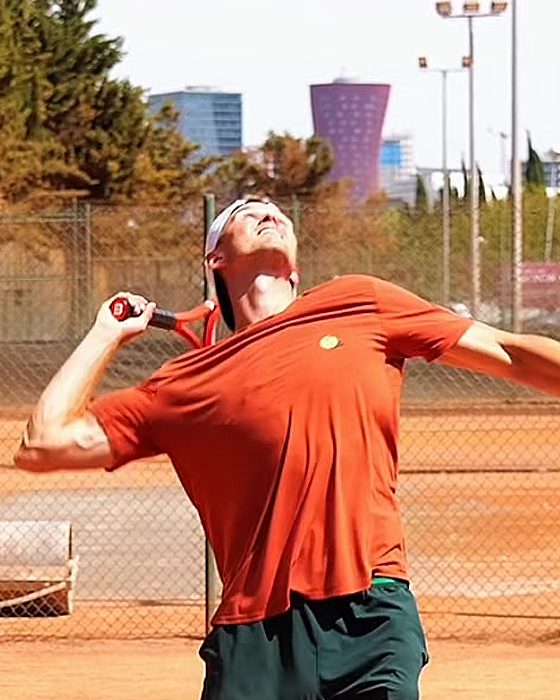
The racket drop is what the racket does behind your back after the trophy: it drops down, edge first, so it can accelerate up to the ball.
After the trophy the racket drops down behind your back, edge first, so it can accelerate up to the ball. A racket that stays up, or drops with the face open like a waiter’s tray, loses most of its speed.
Drills to fix your racket drop
- 1
Towel swing
Hold a towel by one end and swing it like a serve. If it slaps your back between the shoulder blades, the drop is deep and relaxed.
3 sets of 8
- 2
Start from the drop
Begin with the racket already dropped behind your back, edge down, elbow up. Toss and swing up to the ball from there.
3 sets of 8 serves
What your body is doing
Chest, lats and the front of the shoulder stretch as the racket drops, storing energy for the swing up.
Watch Pavel explain it

Plays from YouTube.
How to practise it
- Watch the video first. Then copy the drills slowly, without a ball.
- Practise little and often. Five to ten minutes before each session, for two weeks.
- Add the ball at half pace. Keep the feeling for 10 to 20 serves before you build up speed.
- Check your progress. After two weeks, film one serve side-on and scan it again to compare.
Check the rest of your serve
Film one serve on your phone. Serve Scan tracks your body, scores your serve out of 100 and shows where it leaks power. Your racket drop is one Pavel judges by eye, and your report shows how to get it checked on the same video. Free, and your video stays on your phone.
Questions
What is the racket drop in a tennis serve?
The racket drop is what the racket does behind your back after the trophy: it drops down, edge first, so it can accelerate up to the ball.
How can I check my racket drop?
This one is hard for a camera to judge, so it isn’t in the automatic score. Film one serve side-on and run it through the free Serve Scan: your report shows how to get it checked by Pavel on the same video.
How long does it take to improve?
Practise little and often. Five to ten minutes before each session, for two weeks. Check your progress. After two weeks, film one serve side-on and scan it again to compare.